Shared intake, not a black box
We start with access to what you already have: analytics exports, CRM field names, win/loss notes,
support macros, and the pages that still convert. That intake becomes a living index everyone can
comment on—no mystery “strategy phase” that disappears for weeks.
You will see early outline docs in plain language: audience hypotheses, objection lists, and a draft
message ladder. We mark what is confirmed, what is assumed, and what requires a subject-matter
interview before it can appear in public copy.
Drafts that invite redlines
Copy arrives annotated—why a headline leads, which proof supports it, where localization diverges.
Designers receive content with hierarchy already argued for, so layout debates focus on readability
and motion, not on rediscovering the story.
Technical reviewers get side-by-side comparisons when terminology shifts (for example, “workspace”
vs. “tenant,” or “deployment” vs. “instance”). We track decisions in the margin so the next asset
does not reopen settled fights.
Launch packages you can reuse
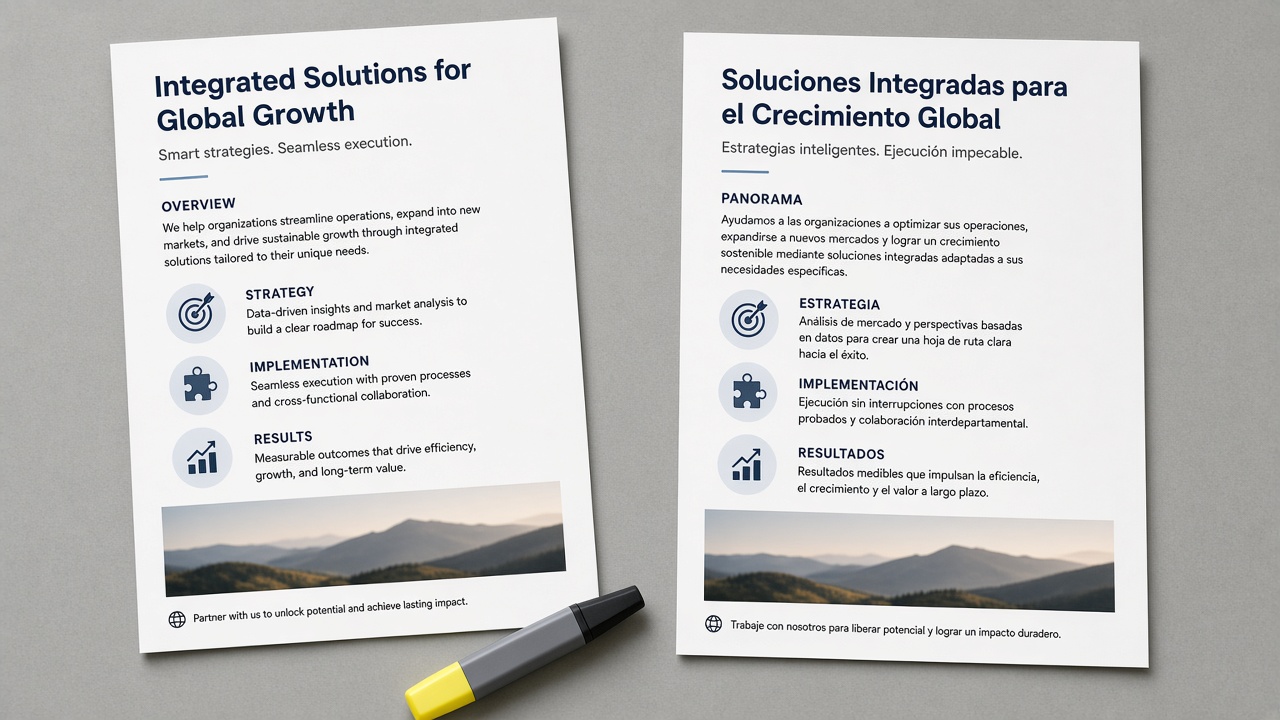
Ship day is not the end state. We deliver modular blocks—hero variants, proof snippets, sales
one-pagers, nurture outlines—that your team can recombine for events, partner campaigns, and
regional pages without rewriting from scratch.
Instrumentation checklists accompany every major release: events to fire, fields to populate, and
the exact sentence that should appear on thank-you pages so downstream automation stays coherent.
Review loops that compound
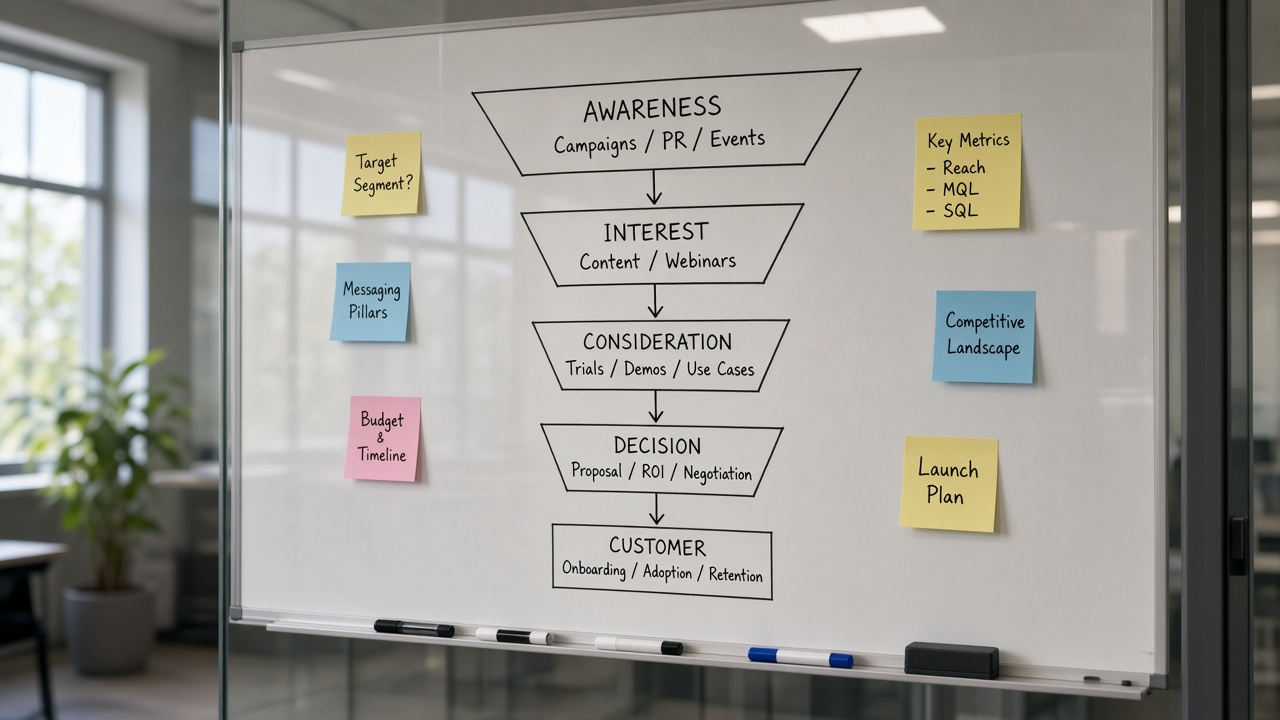
After launch we schedule working reviews tied to funnel behavior—not arbitrary calendar touchpoints.
We look at which messages stall, which segments bounce, and where localized pages diverge from the
core promise.
Findings go back into the narrative index: new objections, fresh proof, retired claims. The goal is
cumulative clarity—each cycle leaves your library of language stronger than the last.